
Cytus
RAYARKMusic
4.631.71K Reviews
- Version
- 10.1.8
- Installs
- 10.00M
- Age Rating
- Teen
Screenshots



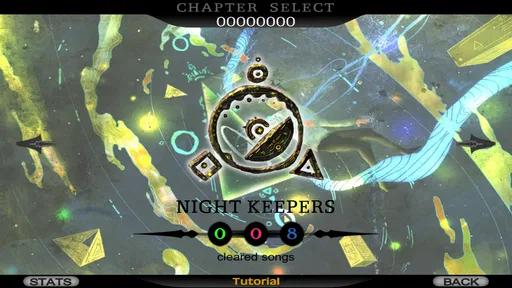
Our Review of Cytus
 Analysis by Appyee
Music games often look simple until the notes arrive faster than your fingers can comfortably react. Cytus is built around that tension: it turns listening into a timing challenge, asking me to follow a moving line and tap notes as the music unfolds. After spending time with it, I found a game that feels more like a focused rhythm session than a casual way to fill a few seconds.
It is a free music game from RAYARK, available for Android and iOS, and its long presence in mobile gaming is easy to understand. The game has an average rating of 4.6 from around 575 thousand ratings, with roughly 32 thousand written reviews and over 10 million installs. Those figures do not guarantee that everyone will enjoy its style, but they do show that Cytus has reached a substantial audience.
The important question is not simply whether it is popular. It is whether the free access gives you enough to enjoy, whether the paid elements feel worthwhile, and whether its particular control method suits the way you like to play rhythm games. My answer is generally positive, with some clear conditions.
How Cytus turns music into a precise challenge
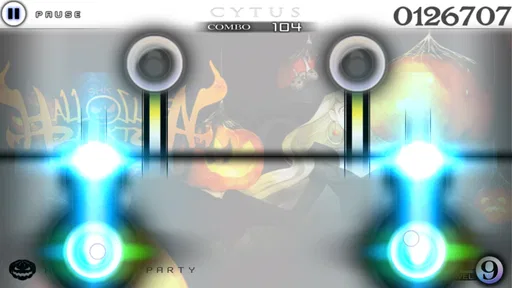
The central idea is immediately recognizable once a song begins. Notes appear around a horizontal scanning line, and I have to tap, hold, or follow them at the right moment as the line passes through them. The presentation gives the game a distinctive identity, but the real appeal comes from how the visual movement makes me listen more carefully.
That design creates a useful difference between simply hearing a song and learning its structure. A first attempt may feel messy because I am watching the line, reading the note positions, and trying to predict what comes next. With practice, those actions start to merge. I stop reacting to every note individually and begin anticipating patterns in the music.
This is where Cytus becomes more satisfying than a basic tap-to-the-beat game. The challenge is not only speed. It is also reading, timing, memory, and control. A slower song can still be difficult if its patterns are placed in an unfamiliar way, while a fast track may become manageable once I understand its rhythm.
The game works especially well with headphones. I can play without them, but the sound cues become easier to separate when outside noise is reduced. I also find that headphones make it simpler to notice whether I am early or late, which matters when trying to improve an individual performance rather than merely finish a song.
There is a learning curve, and the first few sessions may not feel effortless. The scanning line moves continuously, so I cannot wait for a note to become a static target. I need to develop a sense of timing that combines the screen and the soundtrack. Players who prefer relaxed, low-pressure music apps may find this demanding.
Why the presentation still matters
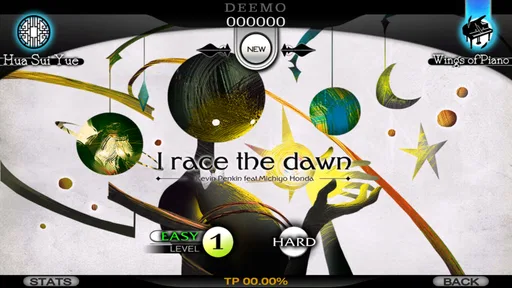
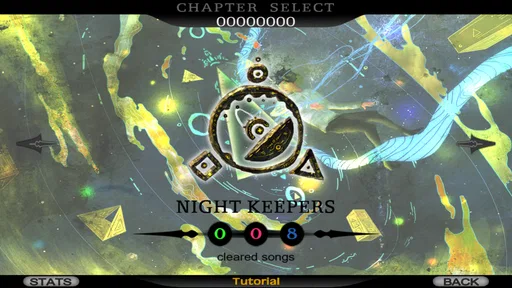
Cytus is not just a collection of songs with buttons placed over them. Its visual style supports the feeling that each track has its own atmosphere. The interface gives the music room to breathe, while the note patterns provide the active layer. I appreciate that the game does not need a crowded screen to make a song feel energetic.
That restraint also helps during difficult sections. When too many decorative elements compete for attention, rhythm games can become tiring to read. Here, my focus remains on the line, the notes, and the timing. The result is not always easy, but it is usually understandable: when I fail, I can often identify whether I rushed, missed a pattern, or lost concentration.
One practical tip is to resist the urge to play every track at maximum speed immediately. I get more from Cytus when I first treat a song as a reading exercise. I watch how the notes are grouped, notice repeated movements, and then try to improve accuracy. That approach is more effective than repeatedly tapping harder and hoping the score improves.
Free access and what value means here
Cytus is free to download and play, which makes the first decision straightforward: you can try its core rhythm experience without paying an entry price. That matters because the control system is personal. Some players will enjoy the scanning-line mechanic right away; others will find it less comfortable than a conventional lane-based rhythm game.
There are in-app purchases ranging from $0.99 to $129.99 per item. I would not treat the presence of those purchases as a reason to avoid the game automatically, but I would approach them carefully. The free starting point lets you decide whether the music, visual presentation, and difficulty curve work for you before spending anything.
For me, the strongest value comes from the ability to use the free version as a genuine trial rather than judging the game from screenshots. A rhythm game can look attractive and still feel wrong in the hands. Cytus lets the timing system make its case directly, and that is more useful than a long feature list.
The paid side should be viewed as optional expansion value, not as part of the basic promise of a free download. If you become attached to the game and want more material, an in-app purchase may make sense. If you only want occasional music challenges, the free experience may already be enough. I would avoid buying anything simply because a difficult song made me feel that I needed more content to justify the time already spent.
That distinction is important for younger players and for anyone sharing a device. The content rating is Teen, and the purchase range means it is sensible to check purchase controls before handing the phone to someone else. The game can be free to start while still offering expensive individual items, so “free” should be understood as free access to begin, not as a promise that every available element costs nothing.
Where the game delivers real value
The best value is its replayability through improvement. I can return to a song not because the game has changed, but because my understanding has. A track that once felt impossible may become readable after I learn its structure. That makes the game suitable for short practice sessions, especially when I want an activity that rewards concentration rather than passive scrolling.
A realistic use case is a commute or a quiet break when I have enough attention for a focused session but not enough time for a larger game. I can play one song, review how it went, and stop without needing to remember a complicated story or manage a long quest. On another day, I can use the same track as a warm-up before attempting harder patterns.
It is also useful for people who enjoy music but do not necessarily want a traditional listening app. Cytus gives me a reason to listen actively. I start noticing percussion, transitions, and changes in intensity because those details often affect the note patterns. It does not replace a music player, but it can make familiar tracks feel more interactive.
Another less obvious strength is that the game encourages controlled repetition. In many mobile games, repeating a stage can feel like grinding. Here, repeating a song has a clear purpose: I am trying to read one section more cleanly or maintain timing through a difficult passage. That makes practice feel connected to a specific skill rather than an arbitrary requirement.
Still, the value depends heavily on your tolerance for failure. Rhythm games do not hide mistakes very well. If you want a game that lets you progress mainly through exploration or collection, Cytus may feel narrow. Its pleasure comes from performing better, not from avoiding the challenge.
Trade-offs in timing, comfort, and progression
The scanning-line mechanic is Cytus’s signature, but it is also the main trade-off. I find it more expressive than fixed lanes, yet it can take longer to read. The line’s movement asks me to divide attention between position and timing, and that can be tiring during dense sections.
Screen size also affects comfort. On a larger phone or tablet, notes are easier to distinguish and tapping feels less cramped. On a small screen, my fingers can cover nearby targets, especially when several notes arrive close together. This does not make the game unplayable, but it can make long sessions less pleasant.
Touchscreen accuracy is another practical factor. If your device has inconsistent touch response, a rhythm game will expose that problem quickly. Before deciding that you are simply bad at Cytus, I recommend trying a few songs with clean hands, removing anything that interferes with tapping, and checking whether the device responds consistently near the edges of the display.
The game also asks for a quiet kind of concentration. I would not choose it while walking, in a crowded place, or during a conversation. The challenge is easy to interrupt, and losing focus for a moment can ruin a promising attempt. A simpler casual game is better when your attention is divided.
Compared with lane-based rhythm games, Cytus feels less standardized and more visually fluid. That can make it more memorable, but it may also make the first session less intuitive. Compared with music apps, it provides far more interaction but far less freedom to simply choose a song and listen. Compared with story-driven games, it offers shorter, repeatable sessions but little reason to continue if you do not enjoy mastering patterns.
That comparison explains who should skip it. If you want a passive soundtrack, a social multiplayer focus, or a game where progress is mostly about unlocking narrative events, this is probably not the right choice. If you dislike retrying the same song to improve your timing, the free download may be worth a brief test but not a long-term commitment.
Small habits that make difficult songs easier
My first recommendation is to separate accuracy from speed. When a song is too difficult, I focus on recognizing the pattern rather than chasing a perfect result. Once the sequence feels familiar, my hands usually become more reliable. This is especially helpful when a section looks chaotic but actually repeats a small movement.
Second, I avoid changing my tapping style constantly. Switching between one finger, several fingers, and broad hand movements can make timing inconsistent. I prefer to choose a comfortable approach for the song and keep it stable until I understand where it breaks down.
Third, I use sound as a correction tool instead of relying only on visual judgment. If my taps seem visually close but the result remains weak, listening for the beat can reveal that I am consistently early. That kind of mistake is easier to fix when I identify it as a timing habit rather than treating every miss as random.
Finally, I take breaks after repeated failures. Cytus rewards concentration, and frustration makes the scanning line harder to follow. A short pause often helps more than another dozen attempts made with tense hands. This is a small change, but it protects the game’s strongest quality: the feeling of gradually understanding a song.
Who will get the most from it
I would recommend Cytus to players who enjoy rhythm challenges, electronic and game-oriented music, and games that reward practice over luck. It is a good fit if you like seeing a measurable improvement in your own performance and do not mind replaying tracks. The free entry also makes it easy to test without committing money first.
It can appeal to experienced rhythm-game players who want a different reading method. The transition from fixed lanes to a moving scanning line may require adjustment, but that difference is precisely why it feels fresh. Players who already understand timing may appreciate the new challenge rather than needing a tutorial-heavy introduction.
It is less suitable for very young children because the content rating is Teen and the precision-based design may be demanding. It is also not ideal for someone looking for a completely relaxing experience. Even when the music is enjoyable, the game asks me to stay alert, and harder songs can become intense.
Device compatibility is fairly accessible: the current version is 10.1.8 and requires Android 5.0 or later on Android devices. That does not tell me how every older phone will perform in practice, so I would still judge comfort by the screen, touch response, and audio behavior of the specific device. A technically compatible phone may still be less enjoyable if its display is cramped or its touch input feels unreliable.
My verdict on downloading or skipping
After weighing the free access, optional purchases, distinctive controls, and demanding timing, I think Cytus is worth downloading if you want a serious mobile music game rather than a background distraction. The free starting point removes the biggest risk: you can discover whether the scanning-line system feels natural before considering any purchase.
I would keep spending optional and personal. The listed purchase range extends from $0.99 to $129.99 per item, so I would not describe every paid choice as automatically good value. First play enough to learn whether you return because you genuinely enjoy the music and practice. If you do, additional content may feel worthwhile; if you do not, paying will not fix the underlying mismatch.
My final recommendation is therefore selective but clear. Try it with headphones, give the controls several songs rather than judging the first minute, and practice one difficult section patiently. If you enjoy the moment when a confusing pattern finally becomes readable, Cytus can provide a rewarding long-term rhythm challenge. If you want effortless listening, story progression, or casual play while distracted, choose a different kind of music app instead.
The free download makes Cytus easy to test, but its lasting value comes from mastering its timing system, not from simply collecting songs. That is both its greatest strength and its most important limitation.
Verdict
Strengths of Cytus
- Responsive tap controls make rhythm patterns feel precise and satisfying.
- Hundreds of songs provide plenty of content for music-game fans.
- Distinct visual styles give each track a memorable presentation.
- Difficulty levels accommodate both newcomers and experienced rhythm players.
- Offline play is convenient when you have downloaded the required content.
Limitations of Cytus
- Some songs and chapters may require purchases or extended grinding.
- Fast note patterns can feel difficult on smaller phone screens.
- The story is atmospheric but can be unclear without close attention.
- Long sessions may become repetitive if you prefer varied gameplay.
- Performance can depend heavily on your device and background processes.
Other Releases by RAYARK
View All


Similar Picks in This Category
View All
Tiles Hop Music & Ball Game
AMANOTES PTE. LTD.4.3

Magic Tiles 3™ - Piano Game
AMANOTES PTE. LTD.4.6

Real Piano
Bilkon3.7

Piano Game: Classic Music Song
Dream Tiles Piano Game Studio4.0

Smash Colors: Music Ball Rush
BADSNOWBALL HONGKONG LIMITED4.2

Piano Music Go-EDM Piano Games
Joy Journey Music Games4.5
Frequently Asked Questions
What is Cytus, and what type of game is it?
Cytus is a rhythm game in which you tap, hold, and slide notes in time with a wide variety of musical tracks. Its futuristic visual style, animated backgrounds, and story elements give it more personality than a basic music-tapping game. The difficulty ranges from approachable songs for beginners to demanding charts designed for experienced rhythm-game players.
Is Cytus free to download and play?
Cytus can generally be downloaded for free, although the available content may depend on the version and platform. Players may encounter optional purchases, advertisements, or additional song packs that unlock more music and features. The free content is enough to understand the gameplay, but users who want the complete experience should review the in-app purchase details before downloading.
Does Cytus require an internet connection?
An internet connection may be needed initially to download the game, verify content, or access certain songs and services. After installation, many core gameplay features can usually be enjoyed offline, which is convenient when traveling or playing without mobile data. However, online requirements can vary by version, so it is worth checking the store information and keeping the game updated.
Is Cytus suitable for beginners, and can the difficulty be adjusted?
Cytus is suitable for beginners because its basic controls are easy to understand: notes must be hit as a scanning line reaches them. However, timing accuracy becomes increasingly demanding as songs become faster and charts include more complex patterns. Multiple difficulty levels allow new players to practice gradually, while advanced players can challenge themselves with difficult tracks and higher scores.
What devices are compatible with Cytus, and does it take much storage space?
Cytus is available for supported Android and iOS devices, but compatibility depends on the operating system version, hardware, and the specific edition of the game. Because it includes music, artwork, effects, and downloadable content, the installation may require more storage than a simple casual game. Check the official store listing and leave additional free space for updates and optional content.
Play our best games!


